Optimized Vessel Design
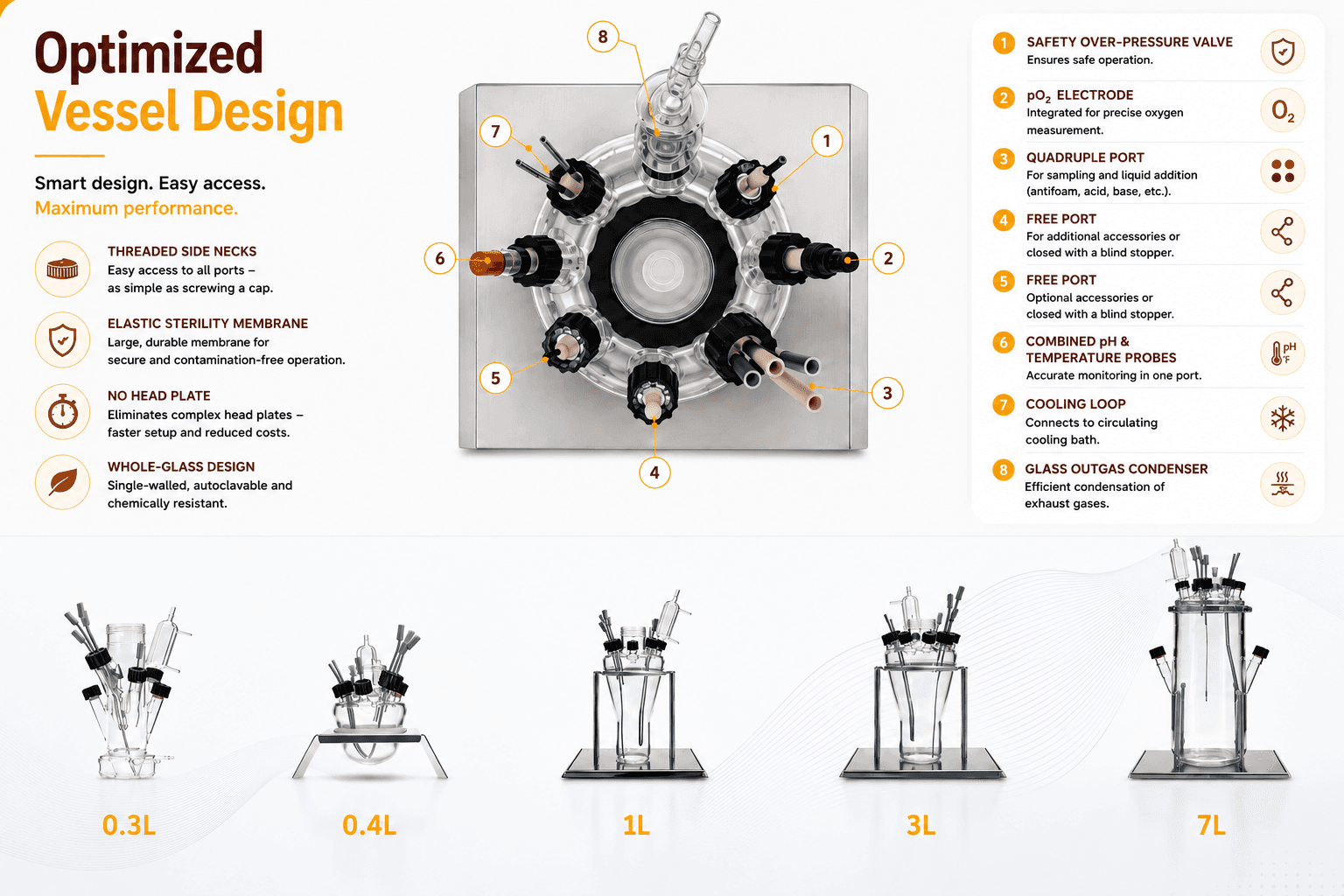
The Minifor2Bio touch eliminates heavy, cumbersome metal headplates and fragile flat O-rings in favor of Pyrex borosilicate glass vessels featuring threaded side necks set at a 30° angle. A central threaded neck accommodates the agitation mechanism, while 6 to 8 peripheral side necks host sensors, sampling lines, and condensers. Reusable silicone multi-seal stoppers deliver reliable gas-tight seals, simplify handling, and withstand repeated autoclaving to prevent contamination vectors.
Great Innovation Begins by Challenging Convention
The LAMBDA fermentation vessel features one central neck with large threads for quick, one‑handed installation of the agitation and aeration system. Around the vessel, eight additional threaded necks (seven small and one larger for quadruple sampling and addition ports) provide excellent accessibility from all sides. Thanks to this design, the MINIFOR configuration offers the equivalent of 16 classical ports.
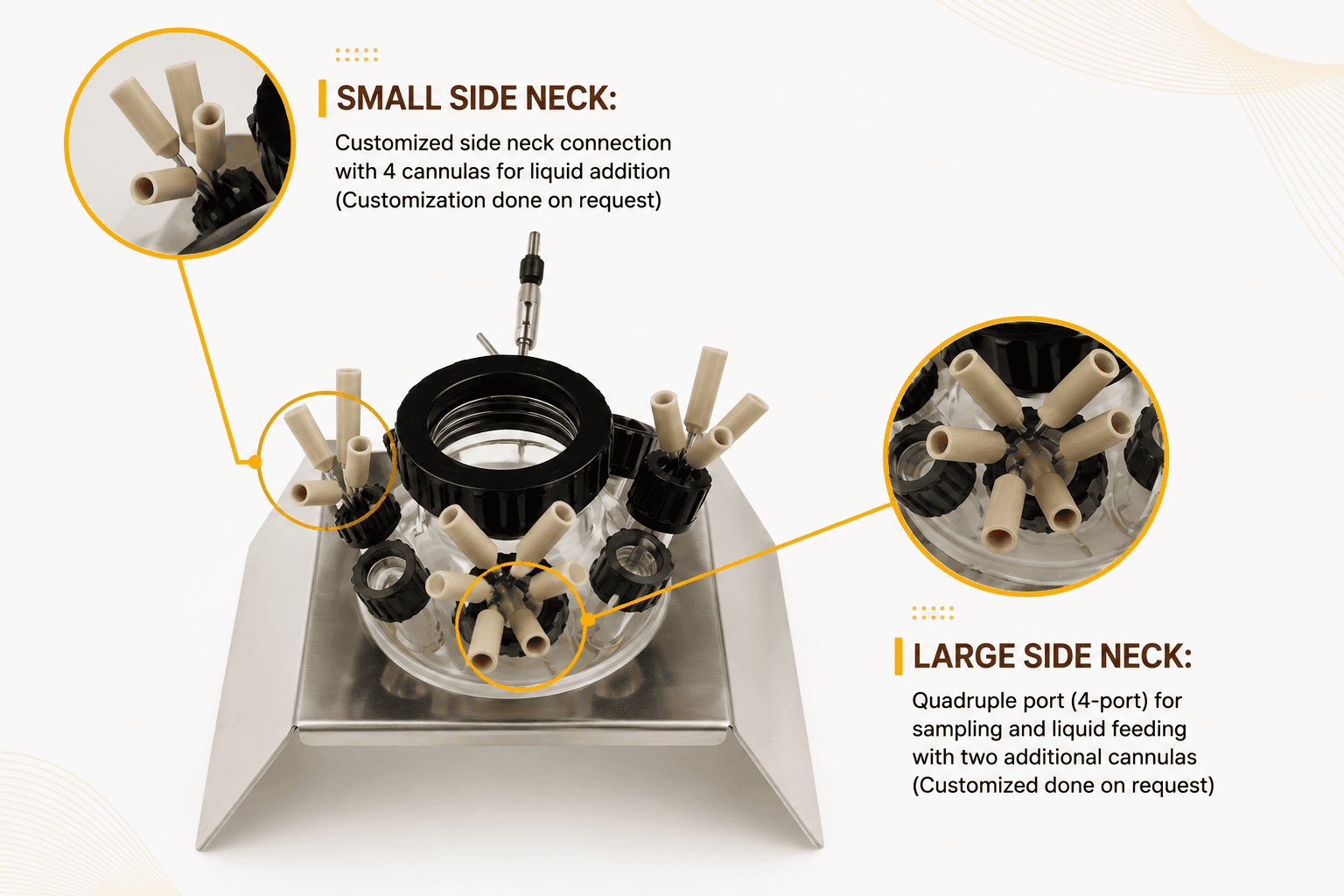
Each side neck is sealed with special elastic stoppers that have a long contact surface and multiple seals to prevent contamination. These stoppers are permanent, reusable many times, and secured by threaded caps—keeping operating and maintenance costs extremely low.
Optimized Glass Vessel Design
The autoclavable, single‑walled glass vessels are available in multiple sizes (0.3 L, 0.4 L, 1 L, 3 L, and 7 L), supporting working volumes from 35 mL up to 6 L. Interchangeable vessels allow researchers to grow cultures at different scales using the same instrument, without the high costs associated with traditional head‑plate systems. Jacketed vessels can also be supplied if required, though the MINIFOR system’s revolutionary radiation heating eliminates the need in most applications.
This modular approach ensures that users are not forced into oversized, impractical vessels just to avoid future costs. Instead, they can select the exact volume needed for their experiment—achieving high‑quality results at minimal expense.
Compact architecture of the LAMBDA Minifor2Bio touch.
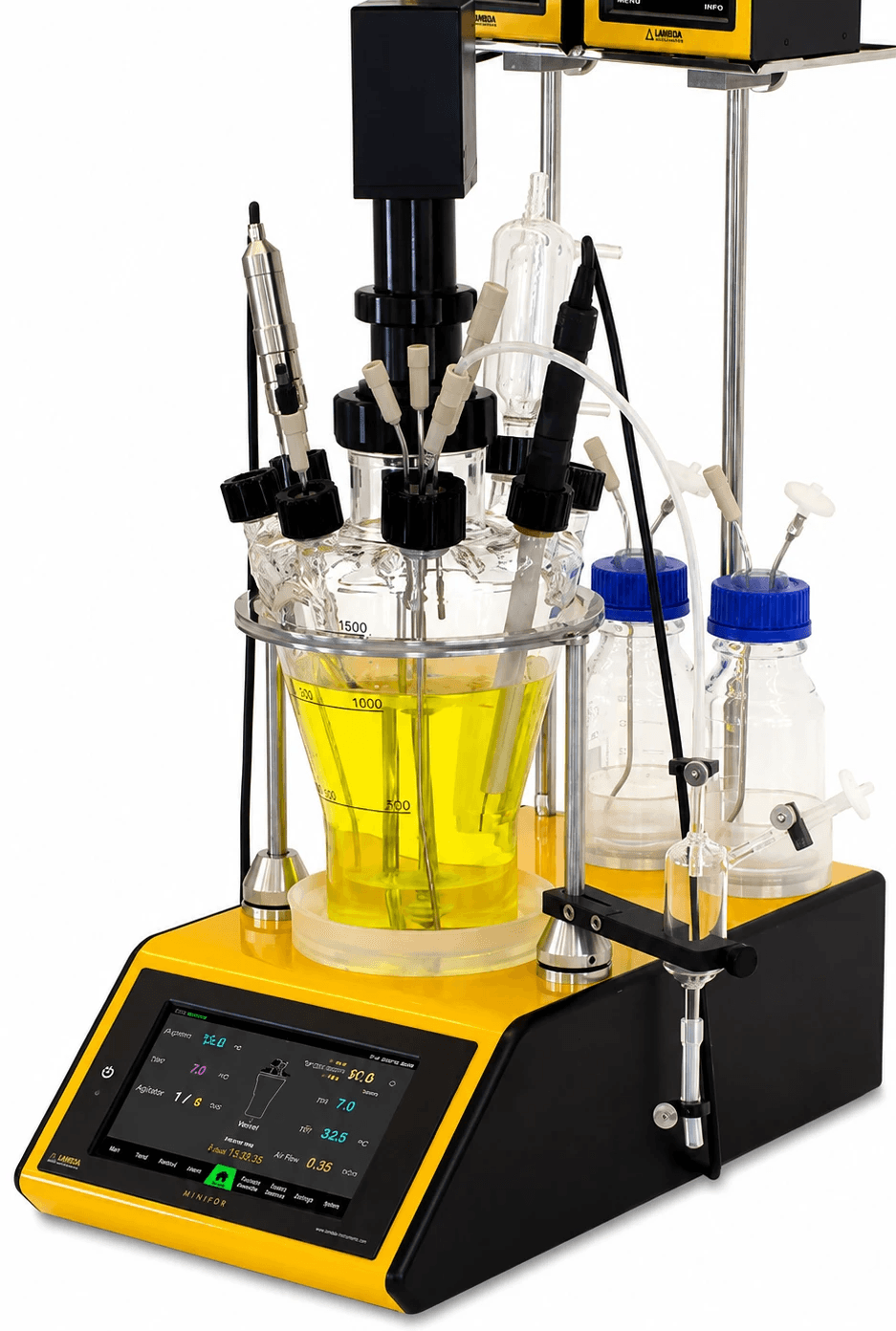
Instead of positioning controllers, heating systems and auxiliary equipment around the fermentation vessel, the LAMBDA Minifor2Bio touch integrates these components within a sealed, water-resistant control unit located directly beneath the vessel. This compact arrangement minimizes the instrument footprint while providing a stable platform for all compatible vessel sizes.
Unlike conventional tower-style bioreactor configurations, where surrounding components can restrict access to the vessel, the Minifor2Bio touch maintains unobstructed access from all sides, facilitating probe installation, sampling and routine operation.
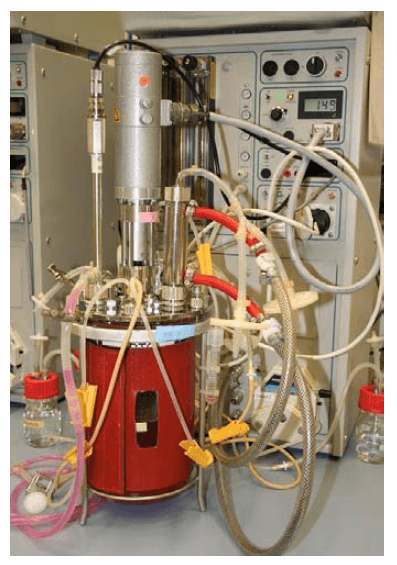
Conventional laboratory bioreactor